The Artists Behind the Artist
No artist works in isolation. Every generation inherits something from those who came before it — a way of seeing, a way of working, or simply the determination to keep going. For Kristan Oud, several artists have had a lasting influence on the way he approaches light, colour, line and place.
Turner: The Changing Sky
For skies, it is J. M. W. Turner.
Turner’s extraordinary ability to capture light as something constantly shifting can be felt throughout Oud’s paintings. His skies are rarely treated as a fixed backdrop. Instead, colour is layered, altered and reworked until it evokes the atmosphere of a particular moment — not an idealised version of the sky, but the feeling of actually being there.
Van Gogh: Colour and Conviction
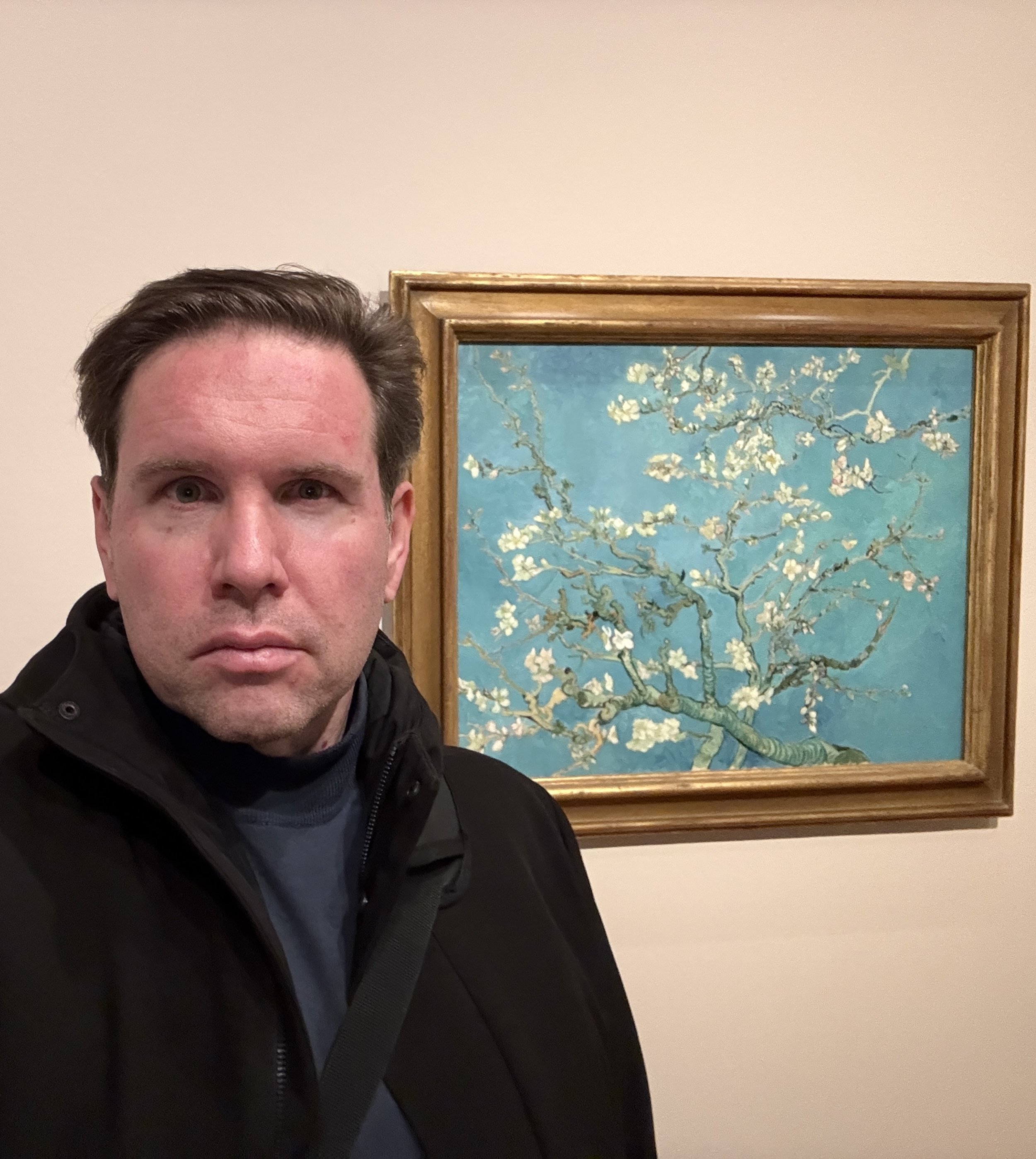
For brushwork, colour and sheer emotional intensity, Vincent van Gogh remains a powerful influence.
That influence is particularly evident in paintings where a vivid passage of colour emerges from an otherwise more restrained scene. Oud repeatedly uses this contrast to draw the eye and establish an emotional centre within the work. Like Van Gogh, he sees colour as more than description: it can carry mood, energy and memory.
Monet: Persistence
Claude Monet represents something different: persistence.
Monet’s work was once considered radical and was met with considerable resistance before his approach became central to the development of modern painting. For Oud, that willingness to pursue a personal vision despite doubt or criticism is as significant as Monet’s paintings themselves.
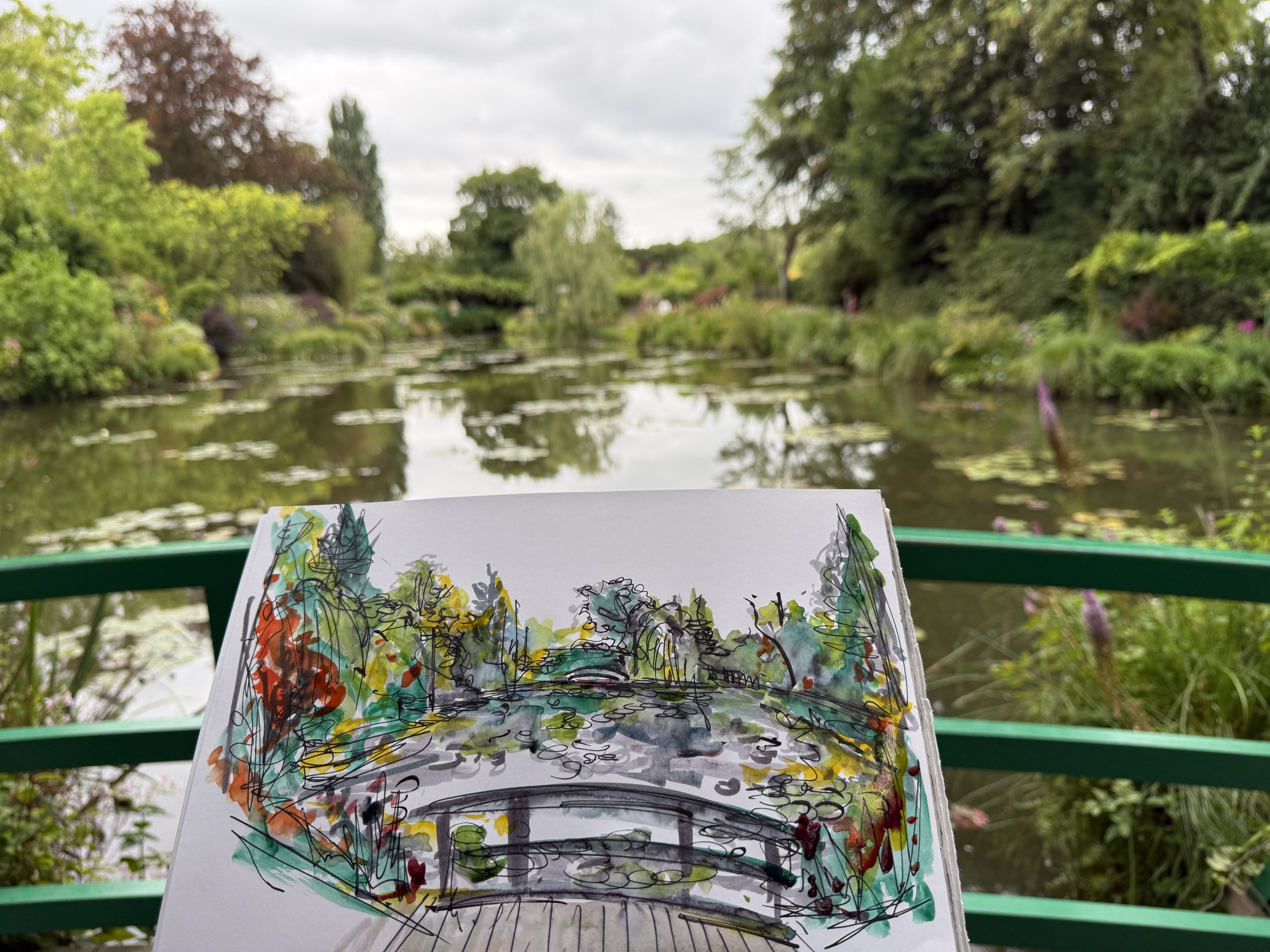
That admiration eventually took Oud to Monet’s garden at Giverny in France. Sitting beside the famous lily pond, he sketched the same landscape that Monet had returned to repeatedly — a quiet, personal pilgrimage to one of the places that helped shape the history of modern painting.
Japan: Line, Restraint and Influence
There is another important connection running through these influences: Japan.
Both Van Gogh and Monet were deeply interested in Japanese ukiyo-e woodblock prints, whose distinctive compositions, flattened perspectives, strong lines and sensitivity to everyday scenes influenced European artists in the late nineteenth century.
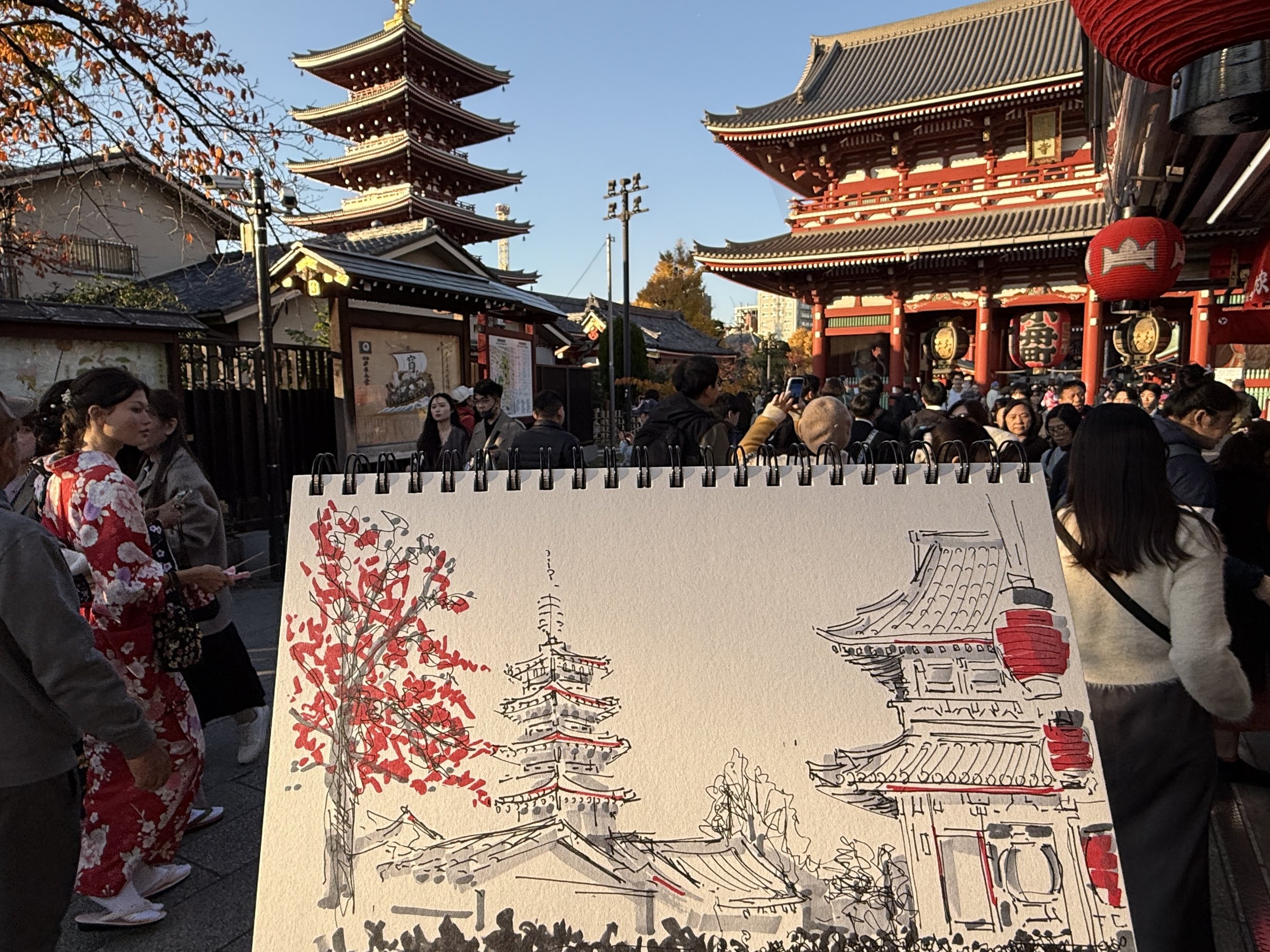
That tradition has a direct resonance with Oud’s own practice. His monochrome architectural sketches, particularly those made in Melbourne and throughout Japan, rely on economy rather than excess. A building can be reduced to a handful of precise lines; an entire streetscape can be captured through what is left out as much as what is included.
In Japan itself, the connection becomes especially immediate. Working within a culture whose visual traditions have influenced Western art for more than a century, Oud’s sketches become part of a much longer conversation between place, architecture, line and observation.
Looking Back to Look Forward
Whenever Oud travels to a new city, visiting its galleries and museums is part of the process.
He looks at what came before — the artists who recorded the city, the movements that shaped its visual identity, and the things that each culture has chosen to preserve. He studies how other artists have seen the same streets, buildings and landscapes, sometimes centuries before he arrived.
For Oud, influence is not about imitation. It is about looking closely, learning, and then finding a way to carry something forward in his own language.
These influences continue to evolve alongside the work itself. The artists who came before provide reference points, but the journey remains ongoing.
Interested in viewing available works by Kristan Oud?
Email contact@oud.art to arrange a private appointment at Oud Art Gallery.