Tucked behind the bustling grounds of Sensō-ji in Asakusa, Demboin Temple is a hidden sanctuary that reflects the quiet elegance of Edo-period Japan. Traditionally the residence of the temple’s head priest, it is best known for its exquisite garden—a rare surviving example of early 17th-century landscape design.
The Demboin Garden, with its heart-shaped pond, centuries-old bell, and historic teahouse, offers a serene contrast to the city beyond its walls. Usually closed to the public, its occasional openings reveal a world of refined beauty and contemplative space.
In artwork, Demboin Temple embodies the harmony of nature, spirituality, and time. It captures a lesser-seen, deeply rooted side of Tokyo—where history whispers through still water and carefully placed stones, inviting reflection and reverence.
Tucked behind the bustling grounds of Sensō-ji in Asakusa, Demboin Temple is a hidden sanctuary that reflects the quiet elegance of Edo-period Japan. Traditionally the residence of the temple’s head priest, it is best known for its exquisite garden—a rare surviving example of early 17th-century landscape design.
The Demboin Garden, with its heart-shaped pond, centuries-old bell, and historic teahouse, offers a serene contrast to the city beyond its walls. Usually closed to the public, its occasional openings reveal a world of refined beauty and contemplative space.
In artwork, Demboin Temple embodies the harmony of nature, spirituality, and time. It captures a lesser-seen, deeply rooted side of Tokyo—where history whispers through still water and carefully placed stones, inviting reflection and reverence.

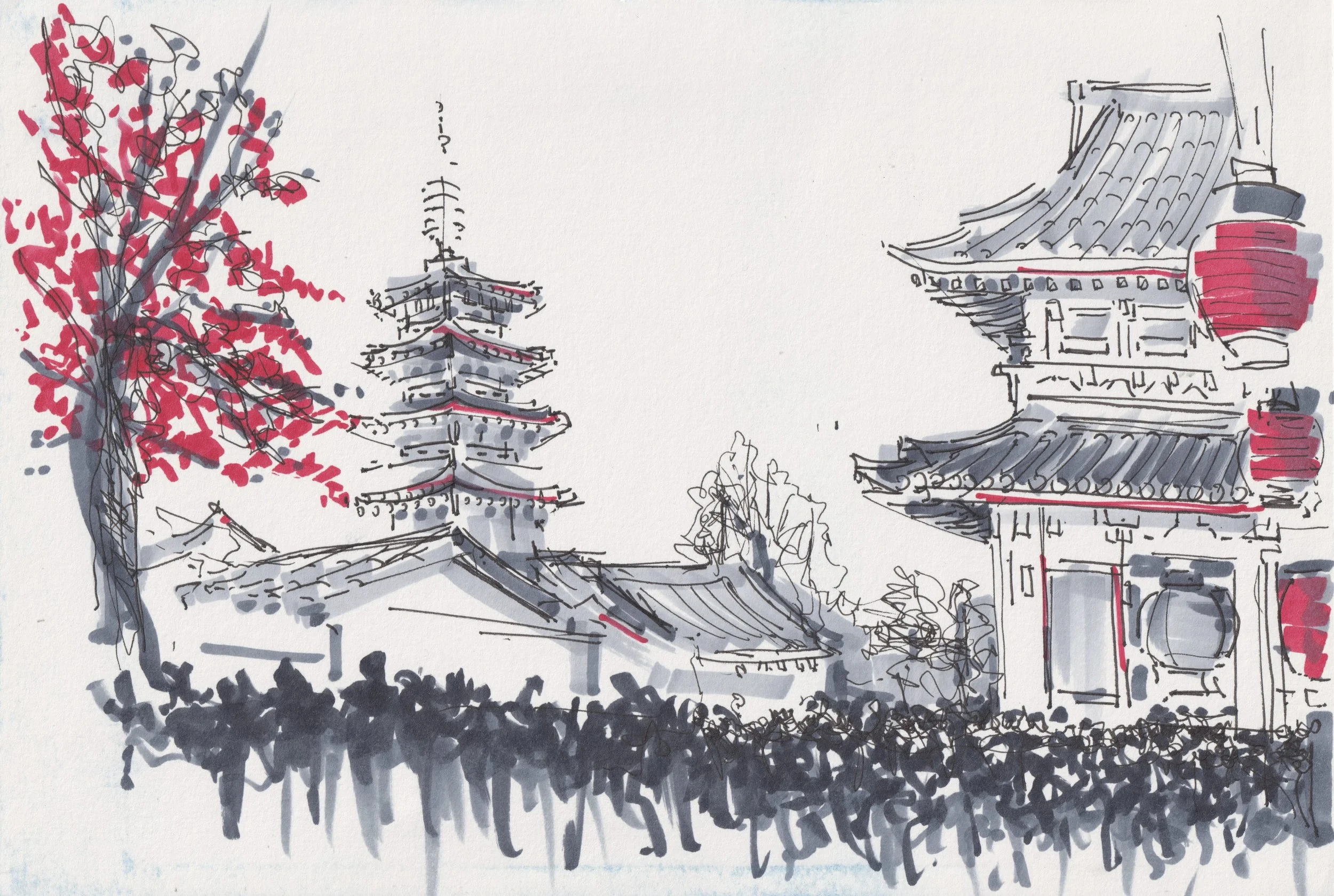 Image 1 of 2
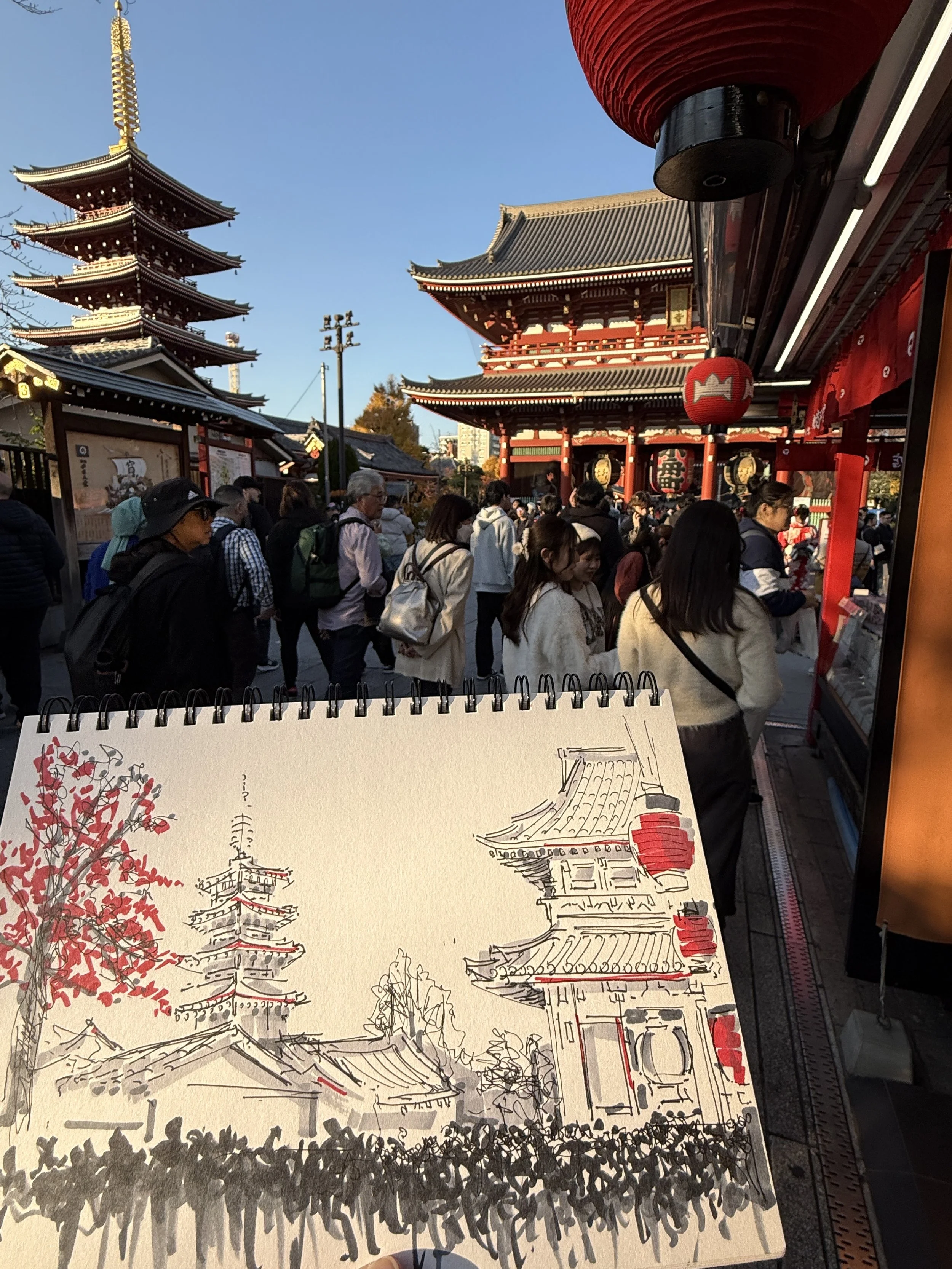 Image 2 of 2