Nijū-bashi Bridge, often called the "Double Bridge," is one of Tokyo’s most iconic landmarks, located at the entrance to the Imperial Palace. The name refers to the optical illusion created when the stone bridge reflects in the water below, appearing as two overlapping arches. Composed of two separate bridges—one stone, one iron—it symbolizes the gateway between Japan’s imperial past and its present.
Originally built of wood, the current iron bridge dates back to 1888 and was part of the Meiji-era modernization. The bridge is not accessible to the public, but it remains a popular viewing point, offering a striking visual connection to the palace and its surrounding gardens.
This artwork captures the elegance and dignity of Japan’s imperial legacy. Framed by lush greenery and traditional architecture, it reflects harmony between human craftsmanship and nature, making it a timeless symbol of Japanese heritage and national identity.
Nijū-bashi Bridge, often called the "Double Bridge," is one of Tokyo’s most iconic landmarks, located at the entrance to the Imperial Palace. The name refers to the optical illusion created when the stone bridge reflects in the water below, appearing as two overlapping arches. Composed of two separate bridges—one stone, one iron—it symbolizes the gateway between Japan’s imperial past and its present.
Originally built of wood, the current iron bridge dates back to 1888 and was part of the Meiji-era modernization. The bridge is not accessible to the public, but it remains a popular viewing point, offering a striking visual connection to the palace and its surrounding gardens.
This artwork captures the elegance and dignity of Japan’s imperial legacy. Framed by lush greenery and traditional architecture, it reflects harmony between human craftsmanship and nature, making it a timeless symbol of Japanese heritage and national identity.

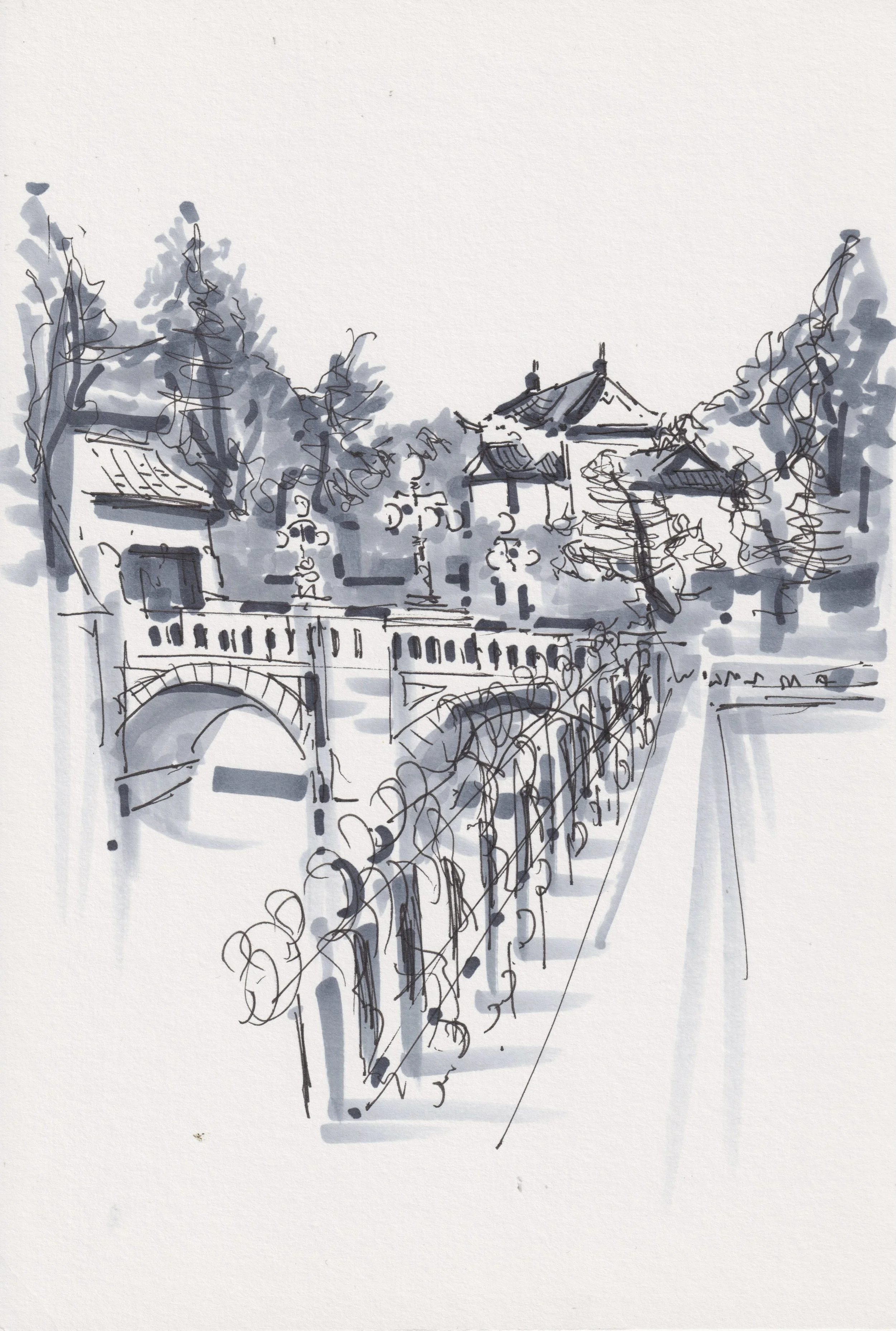 Image 1 of 2
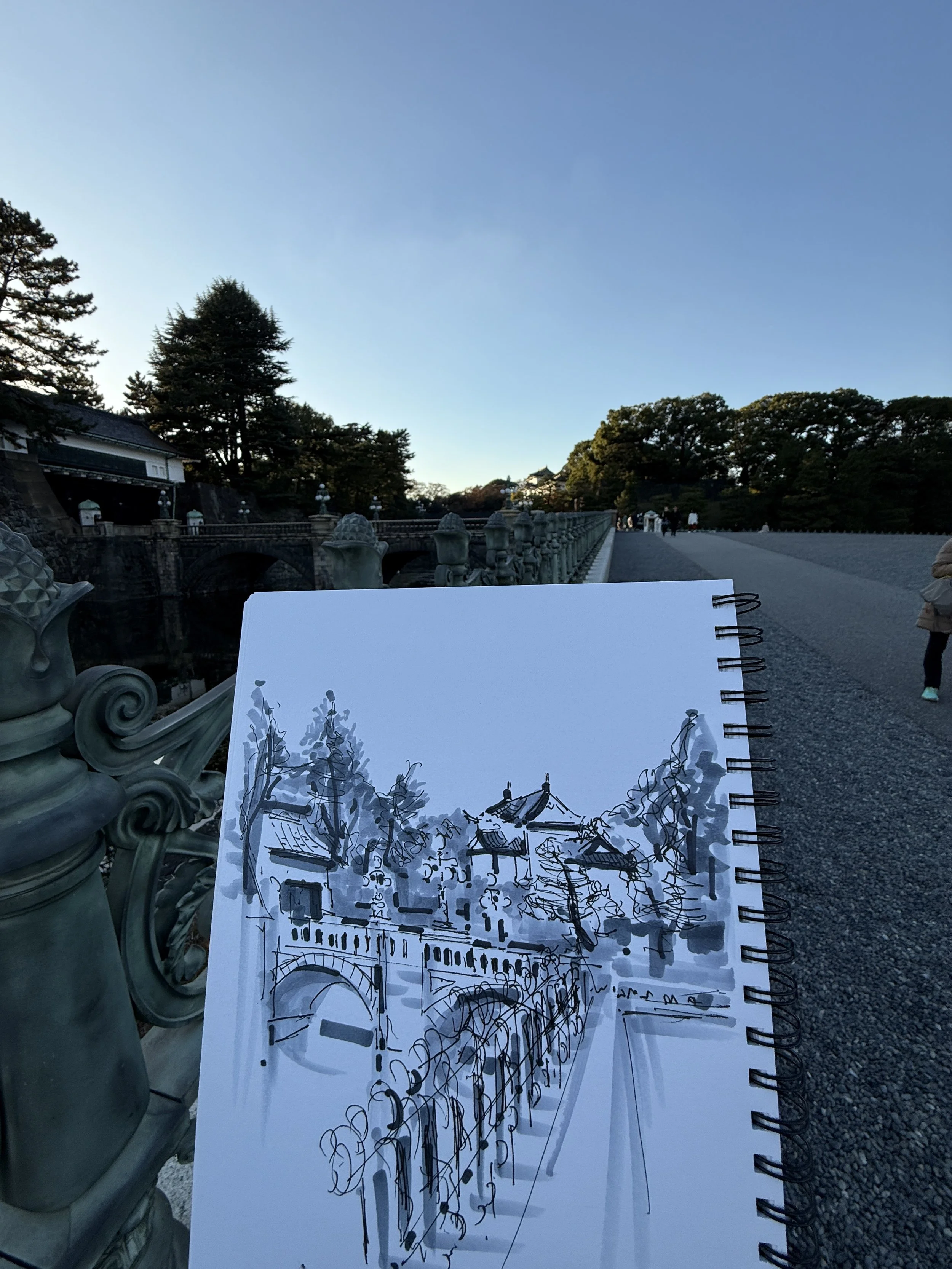 Image 2 of 2