Rendered in black and white, Mount Fuji transcends color to become a pure symbol of form, balance, and timeless stillness. Stripped of seasonal hues, the mountain’s silhouette stands stark and majestic—emphasizing its perfect symmetry and spiritual gravity.
In this monochrome portrayal, Mount Fuji becomes a meditation on contrast: permanence and impermanence, light and shadow, nature and the sublime. It invites the viewer to see the mountain not just as a landscape, but as a presence—quiet, powerful, and eternal.
This depiction echoes traditional Japanese aesthetics of simplicity and restraint, aligning with concepts like wabi-sabi and ma, where beauty lies in subtlety and space. It is not merely a portrait of a peak, but a visual poem honouring Japan’s most sacred mountain.
Rendered in black and white, Mount Fuji transcends color to become a pure symbol of form, balance, and timeless stillness. Stripped of seasonal hues, the mountain’s silhouette stands stark and majestic—emphasizing its perfect symmetry and spiritual gravity.
In this monochrome portrayal, Mount Fuji becomes a meditation on contrast: permanence and impermanence, light and shadow, nature and the sublime. It invites the viewer to see the mountain not just as a landscape, but as a presence—quiet, powerful, and eternal.
This depiction echoes traditional Japanese aesthetics of simplicity and restraint, aligning with concepts like wabi-sabi and ma, where beauty lies in subtlety and space. It is not merely a portrait of a peak, but a visual poem honouring Japan’s most sacred mountain.

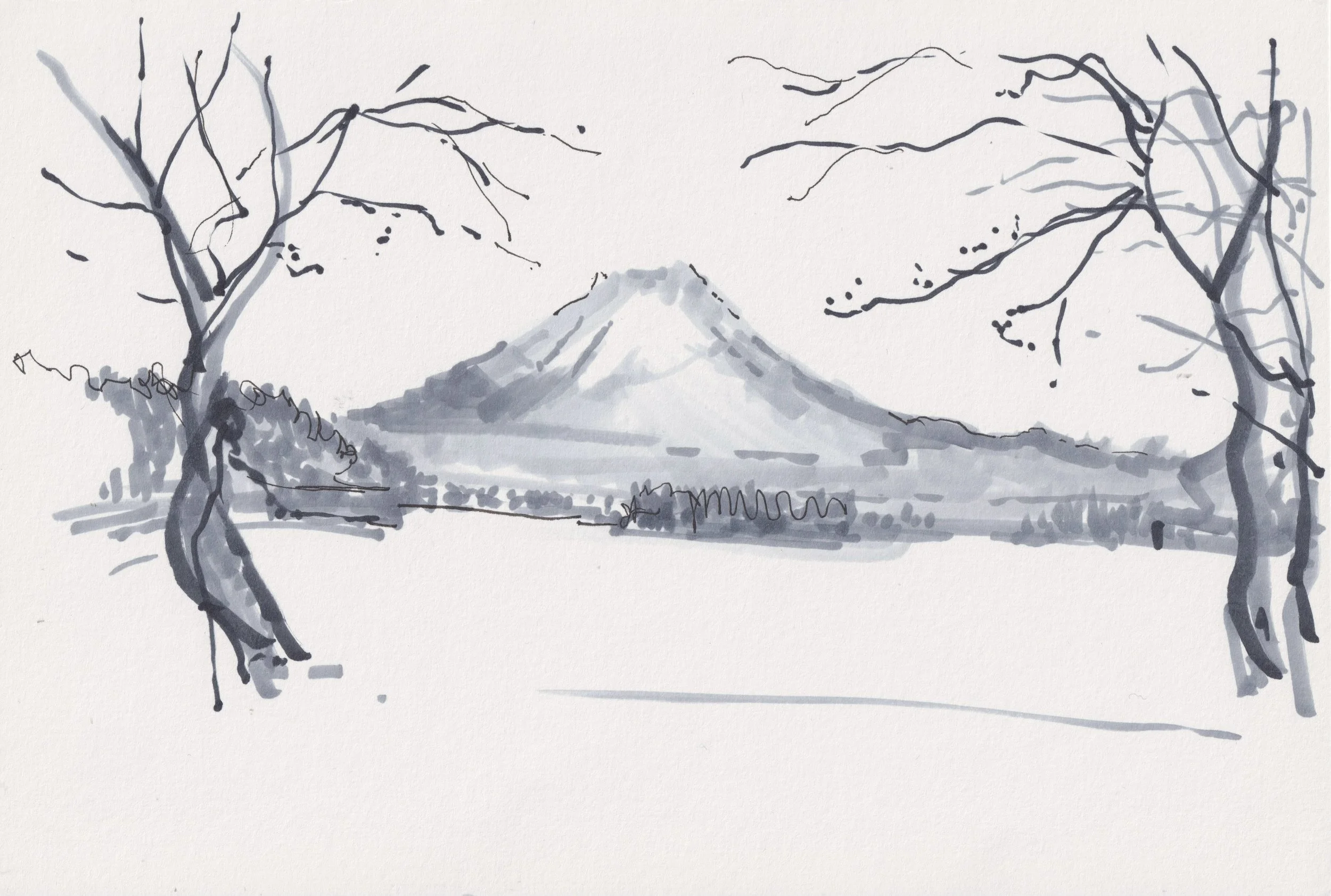 Image 1 of 2
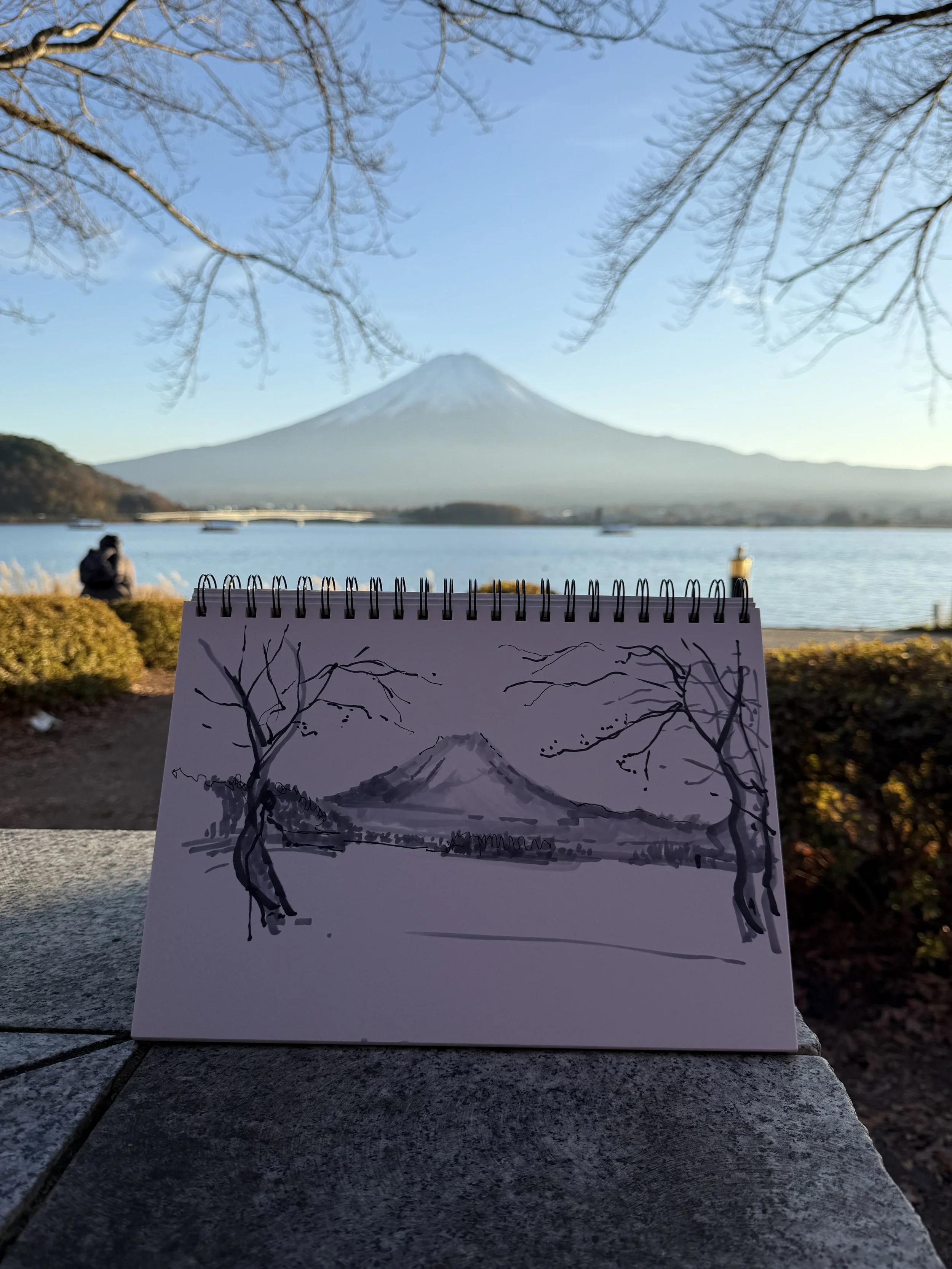 Image 2 of 2