In black and white, Tokyo Tower emerges not just as a landmark, but as an architectural silhouette—sharp, elegant, and quietly iconic. Freed from its vibrant red and white paint, the tower becomes a study in contrast and geometry, its lattice frame cutting a striking figure against the sky.
This monochrome interpretation highlights Tokyo Tower’s dual identity: a postwar symbol of Japan’s resilience and modernization, and a quiet sentinel over the city’s ever-changing landscape. Without color, its form takes center stage—clean lines, steel strength, and the delicate balance between tradition and progress.
In artwork, Tokyo Tower rendered in black and white evokes nostalgia and contemplation. It becomes less about where it stands and more about what it stands for—a moment in time, a rise from the past, and a nation’s enduring gaze toward the future.
In black and white, Tokyo Tower emerges not just as a landmark, but as an architectural silhouette—sharp, elegant, and quietly iconic. Freed from its vibrant red and white paint, the tower becomes a study in contrast and geometry, its lattice frame cutting a striking figure against the sky.
This monochrome interpretation highlights Tokyo Tower’s dual identity: a postwar symbol of Japan’s resilience and modernization, and a quiet sentinel over the city’s ever-changing landscape. Without color, its form takes center stage—clean lines, steel strength, and the delicate balance between tradition and progress.
In artwork, Tokyo Tower rendered in black and white evokes nostalgia and contemplation. It becomes less about where it stands and more about what it stands for—a moment in time, a rise from the past, and a nation’s enduring gaze toward the future.

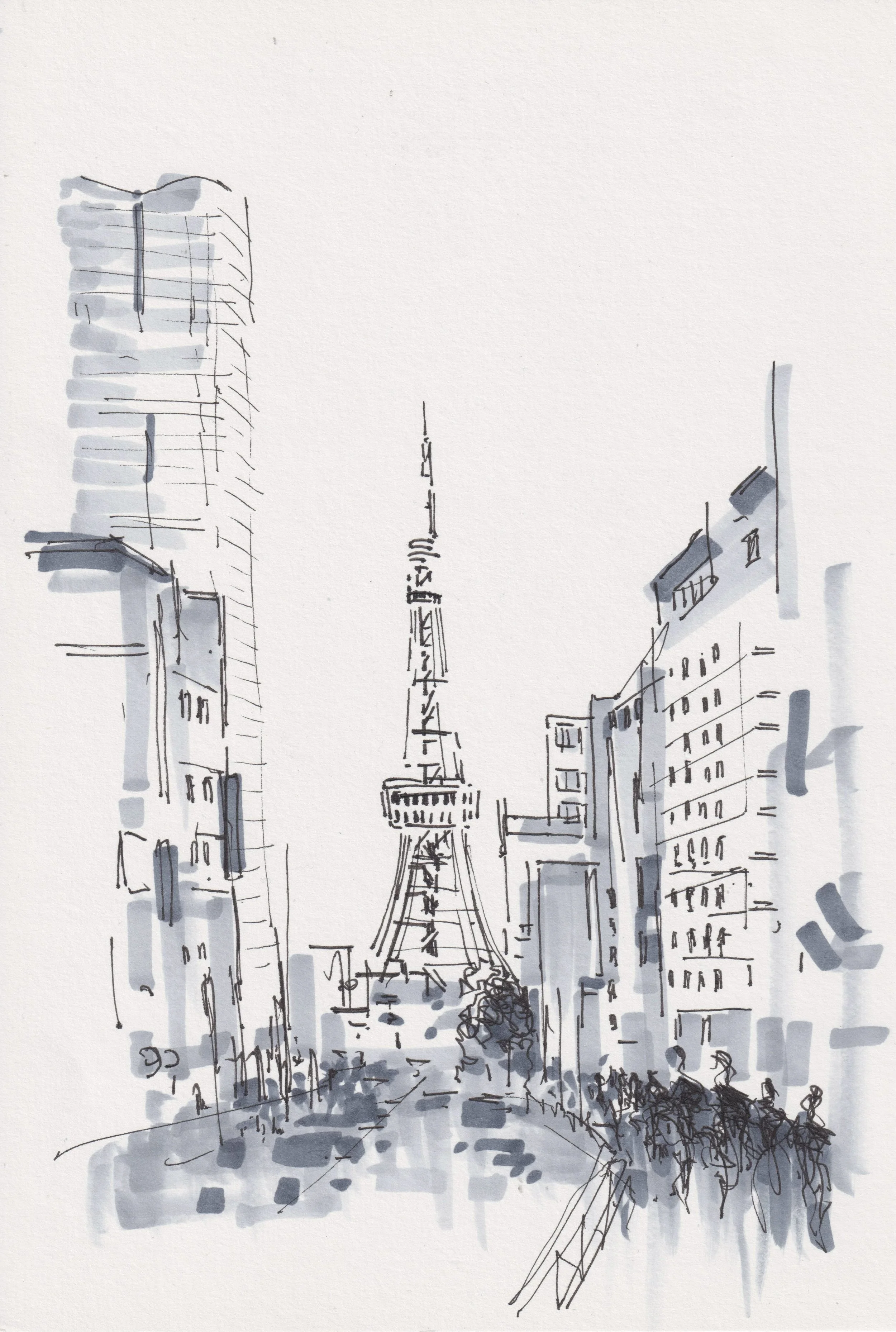 Image 1 of 2
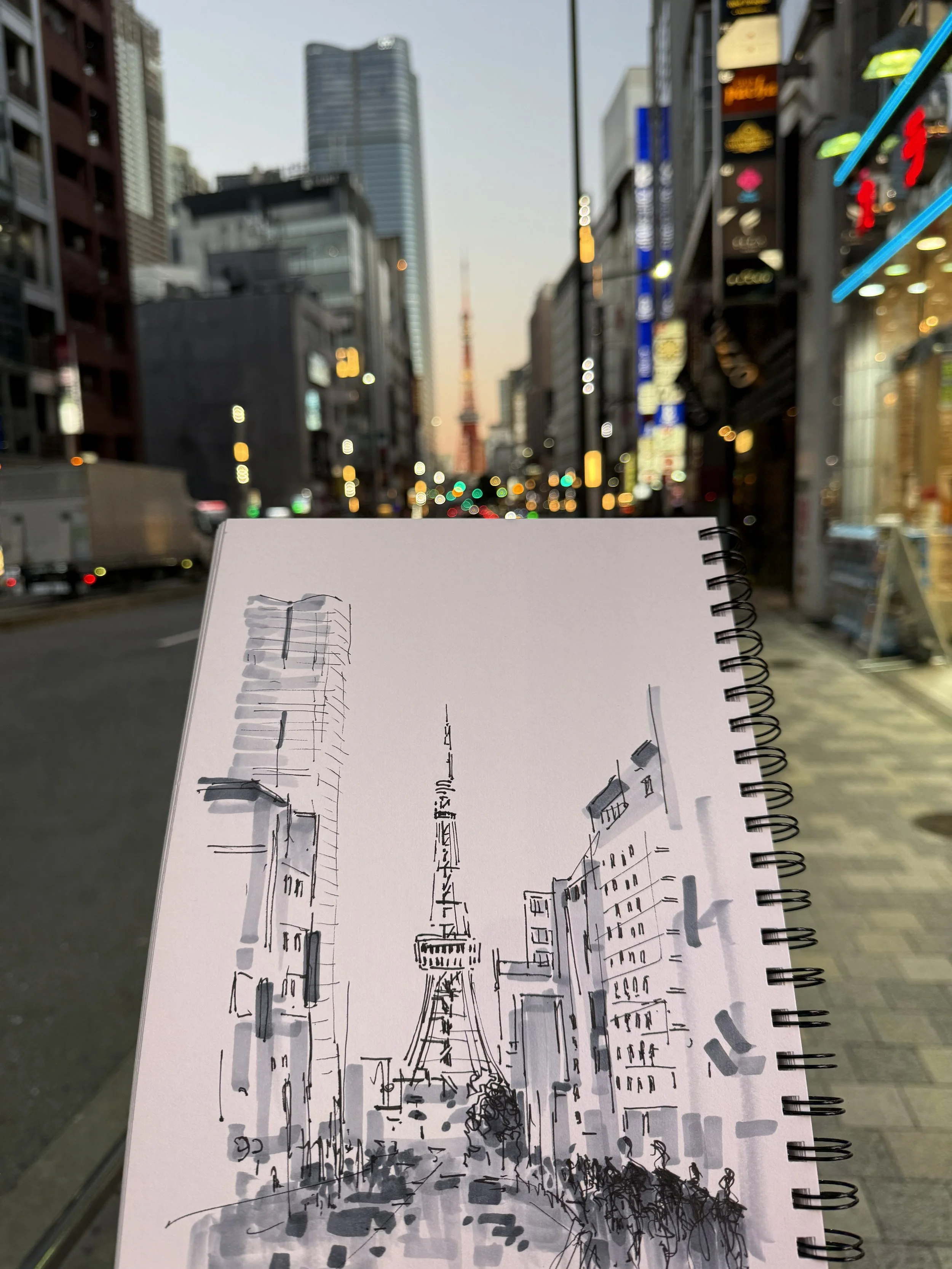 Image 2 of 2